
4 minutes reading time
I opened LinkedIn this morning and found a message sitting right at the top of my inbox. Clean profile photo. Professional formatting. And right under the name, a badge that said Sponsored.
LinkedIn took actual cash money to put it there.
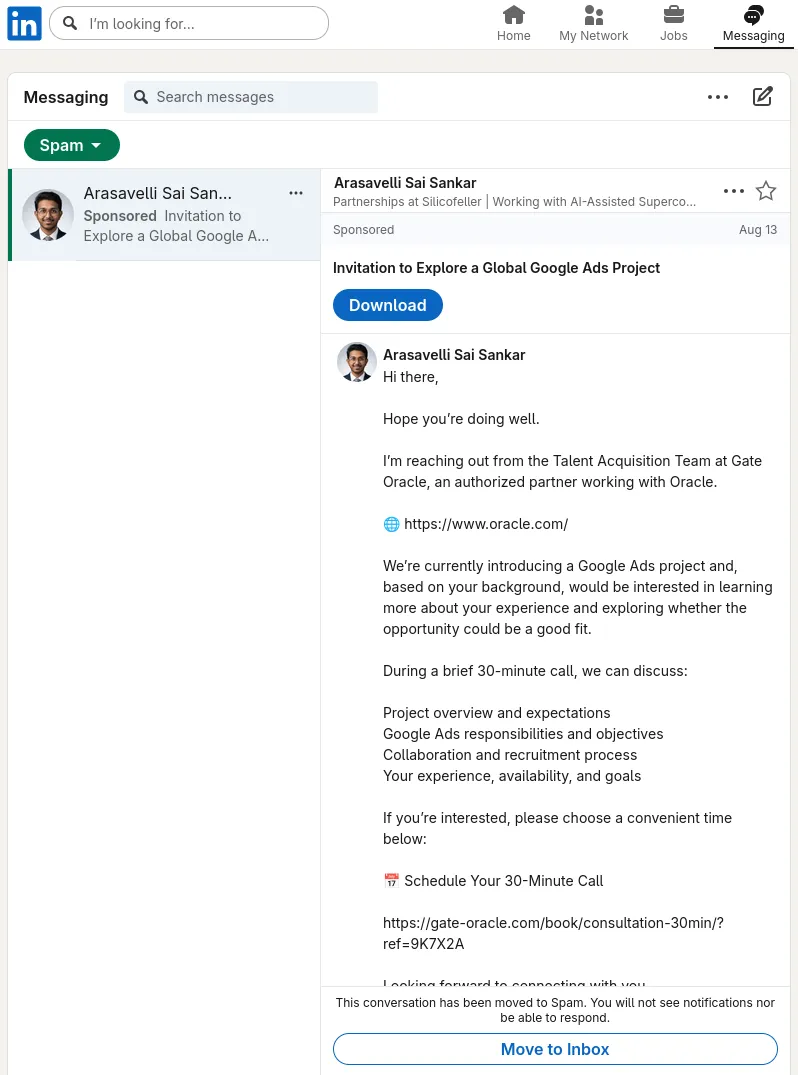
Before reading the text, I read the sender's headline. It was a masterpiece of modern corporate comedy. The guy claims to be in Partnerships at a company called Silicofeller, working with an “AI Assisted Superconducting Quantum Chip Engineering Platform | Quantum Computing | Superconducting Systems | AI & Emerging Technologies.”
Every single buzzword from the last three years got crammed into one headline. If you threw a dictionary into a blender with a Nvidia pitch deck, this is what would come out. I half expected to see room temperature superconductors and fusion energy tacked onto the end just for good measure.
Then I read the actual message.
You would think a guy running partnerships for an AI assisted superconducting quantum chip platform might want to talk about quantum decoherence, silicon wafer fabrication, or maybe cryogenic cooling circuits.
No. He was reaching out on behalf of something called "Gate Oracle" (an authorized partner working with Oracle, apparently) to invite me to explore a... "Google Ads project."
Read that sequence again. A quantum computing partnership lead, working on superconducting AI chips, pays LinkedIn to send me a sponsored message asking if I want to hop on a 30 minute call to manage Google Ads for an Oracle subpartner.
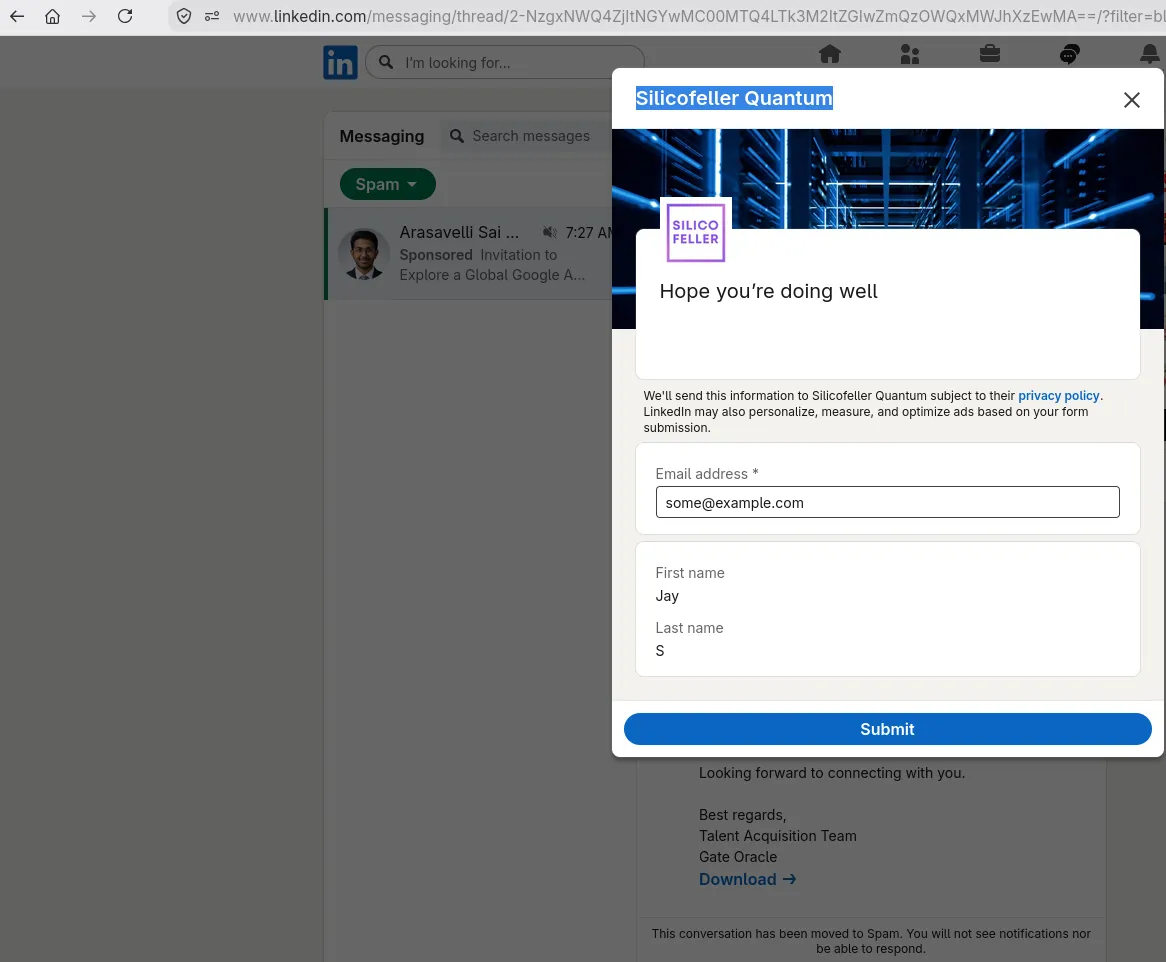
If you click the lead button, LinkedIn even pops up a native in-app form collecting your name and email to send directly to "Silicofeller Quantum."
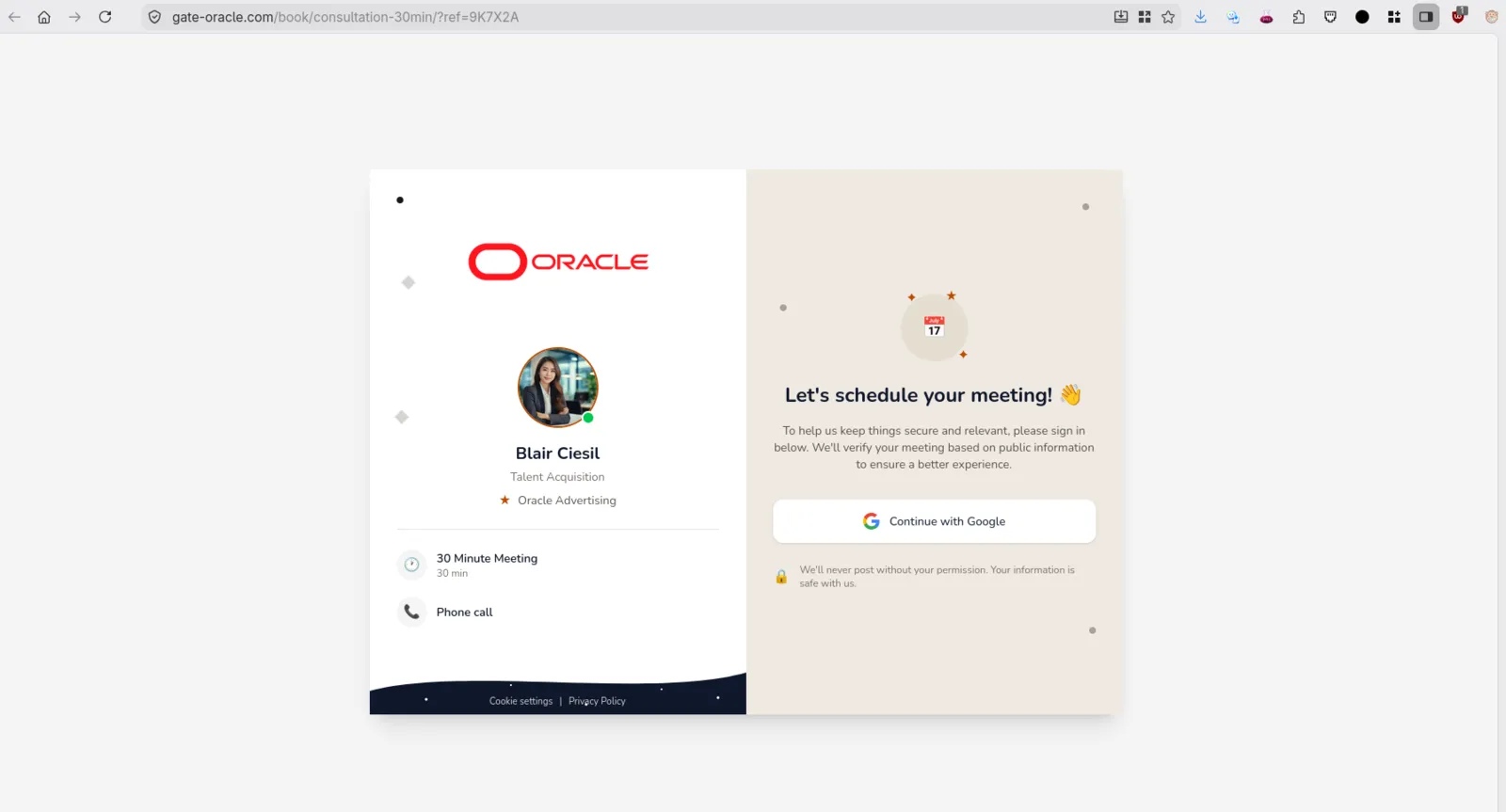
And if you click the booking link in the message, it takes you out to gate-oracle.com. A domain registered by god knows who, complete with a stolen Oracle logo and a "Continue with Google" OAuth prompt designed to harvest your credentials.
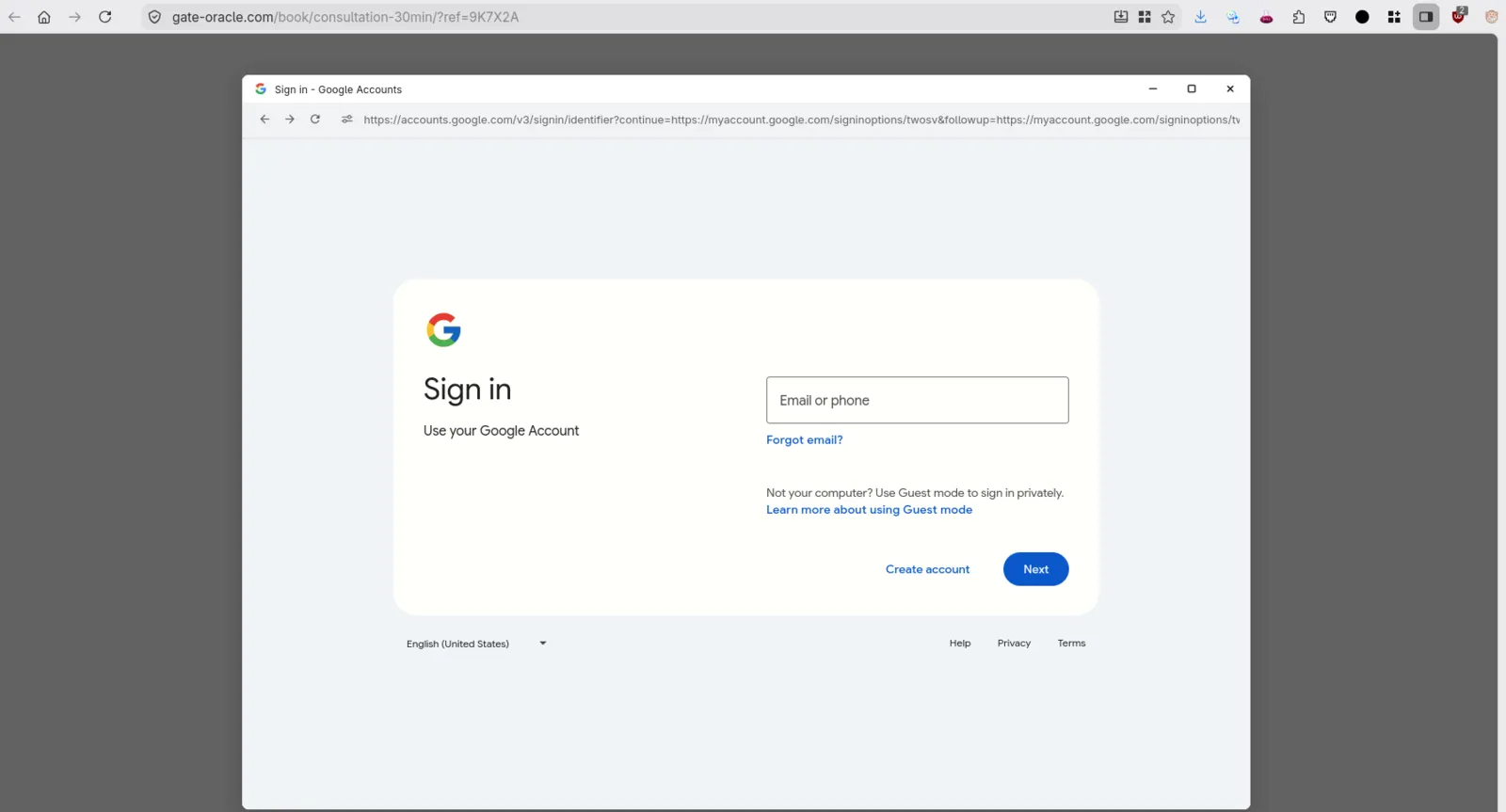
Click that "Continue with Google" button and it spawns the classic credential harvester login popup, ready to hijack your account.
It is absurd on the surface, but the funniest part is not the scammer. Scammers have been selling fake gold and bogus tonic since the Middle Ages. The funny part is LinkedIn.
LinkedIn spends half its product cycle preaching about trust, identity, professional networking, and real name authenticity. They charge ridiculous monthly fees for Recruiter licenses and Premium accounts. They lock down features and throw up verification prompts if you move too fast.
Yet the moment a scammer hands them a credit card, all that algorithmic vigilance evaporates.
If you are an ordinary user sending a cold message to a classmate, LinkedIn flags you for spam. But if you pay for a Sponsored InMail, you can pretend to be a quantum physicist offering fake Google Ads contracts from a suspicious domain, and LinkedIn will happily deliver it straight to the top of my inbox with a bow on top.
The platform is not filtering for legitimacy. It is filtering for ad spend.
We live in a tech ecosystem where the resume titles are generated by hallucinating bots, the job offers are phishing lures for ad management, and the middleman taking a cut from the scam is a multi billion dollar professional network platform.
Next time someone tells you quantum computing is going to revolutionize the world, remember that right now its main application is selling fake ad gigs in your LinkedIn DMs.
Image Credit: De kwakzalver by Jan Steen via Wikimedia Commons